
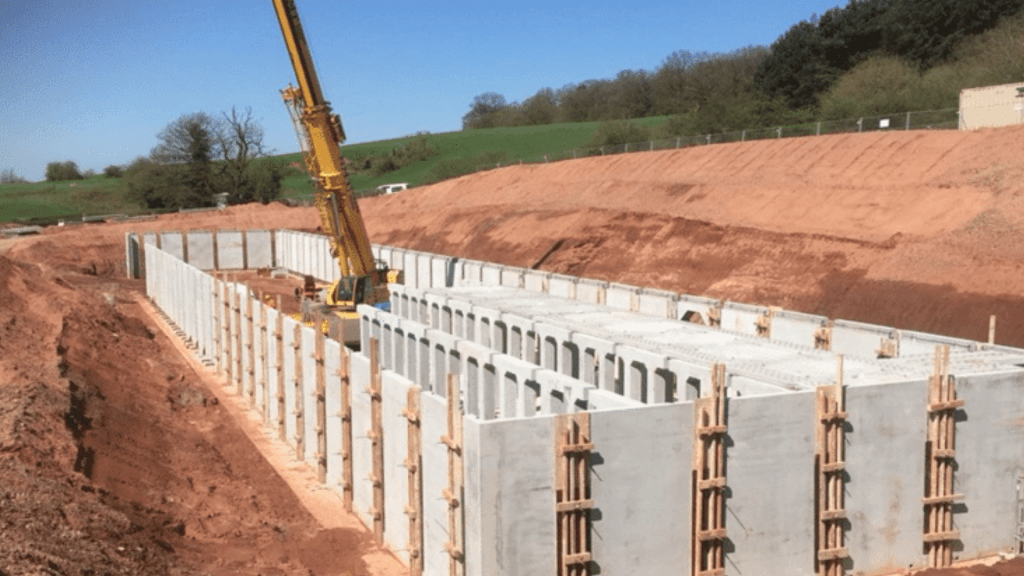
Stormwater management is the way by which stormwater or rainwater is collected in a tank or diverted underground to stop flooding. These days, most residential projects and colonies comprise stormwater attenuation tanks to store the water collected from rain and storm. Establishing a stormwater management system is important in light of the fact that urban areas are mostly impermeable and thus, do not support the natural process of water absorption that earth uses to collect and clean rainwater. Among the various techniques of stormwater attenuation, the subsurface stormwater management system is the most common one.
In this method, stormwater is stored by using perforated pipes, stormwater chambers, gravel beds, and perforated pipes. The stormwater chambers are prefabricated tanks that are embedded in the ground to retain rainwater. Available in different shapes and sizes, the storage tank is another important device that is made from prefabricated concrete or corrugated metal pipe. Now, as implied by their name, gravel beds are excavated areas that are filled with gravels. They soak a large amount of water by using the spaces between graven grains, which is then allowed to infiltrate underground. While this system occupies more space than the other three options, it achieves the highest soil infiltration due to the absorption area. And, the last option which is perforated pipes is used to enhance the rainwater holding capacity.
The subsurface stormwater system is effective when a residential colony has sufficient outdoor space. They are deployed in basements where the sewage system is quite apart. It should be created at least three feet above the groundwater level and 10 feet away from the building’s foundation. The advantage of this system is that it can be completely covered by a concrete structure or with landscaping.
 Storm Water Attenuation Article